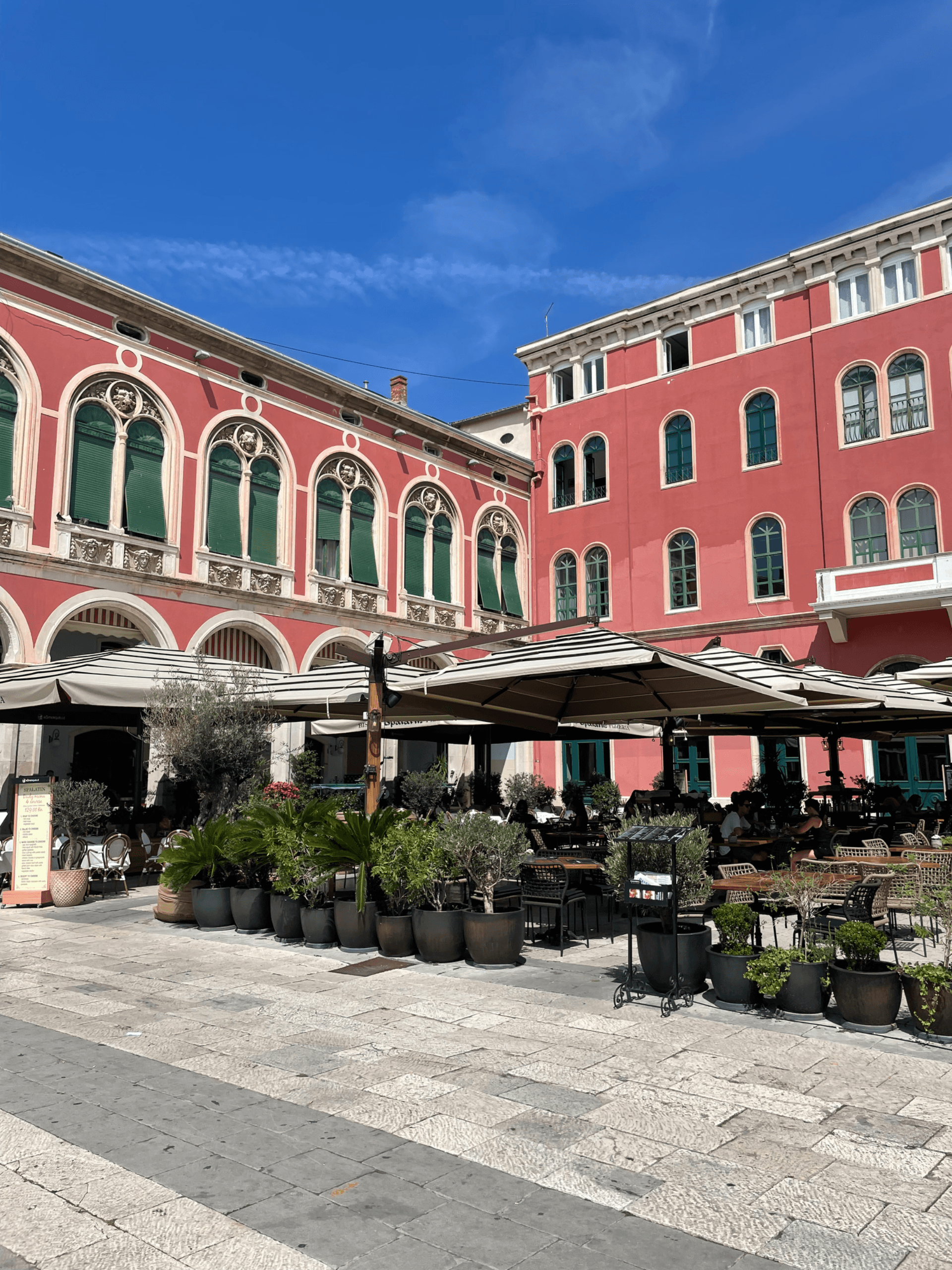
When people think of Croatia, Dubrovnik usually comes to mind first. And yet, Split is more than worth your time. The capital of Dalmatia hides behind its white stone facades a truly unique historical treasure : a 1,700-year-old Roman palace, still inhabited and alive, where everyday life continues to unfold within ancient walls. Medieval alleys, Mediterranean vibes, beaches within walking distance and a day trip to Hvar just a boat ride away we were won over, and you will be too.
1- When to go?
May and June : Our favourite time to visit. Temperatures are pleasant (between 20 and 28°C), the sea is starting to warm up, and the city hasn't yet been taken over by summer crowds. Accommodation prices are also much more reasonable.
July and August : Peak season. Dalmatia is at its hottest (up to 35°C) and Split is packed. Beaches fill up fast and places to stay in the old town go quickly. If this is your window, book well in advance.
September : A great compromise. The sea is still warm, the crowds start to thin out and the atmosphere feels more relaxed. Arguably the best time to experience the city at its finest.
To avoid : Between November and March, many tourist activities shut down and the vibe is very different. The city is still beautiful but you'll miss out on the best of what Split has to offer.
2- The must-sees for a great trip
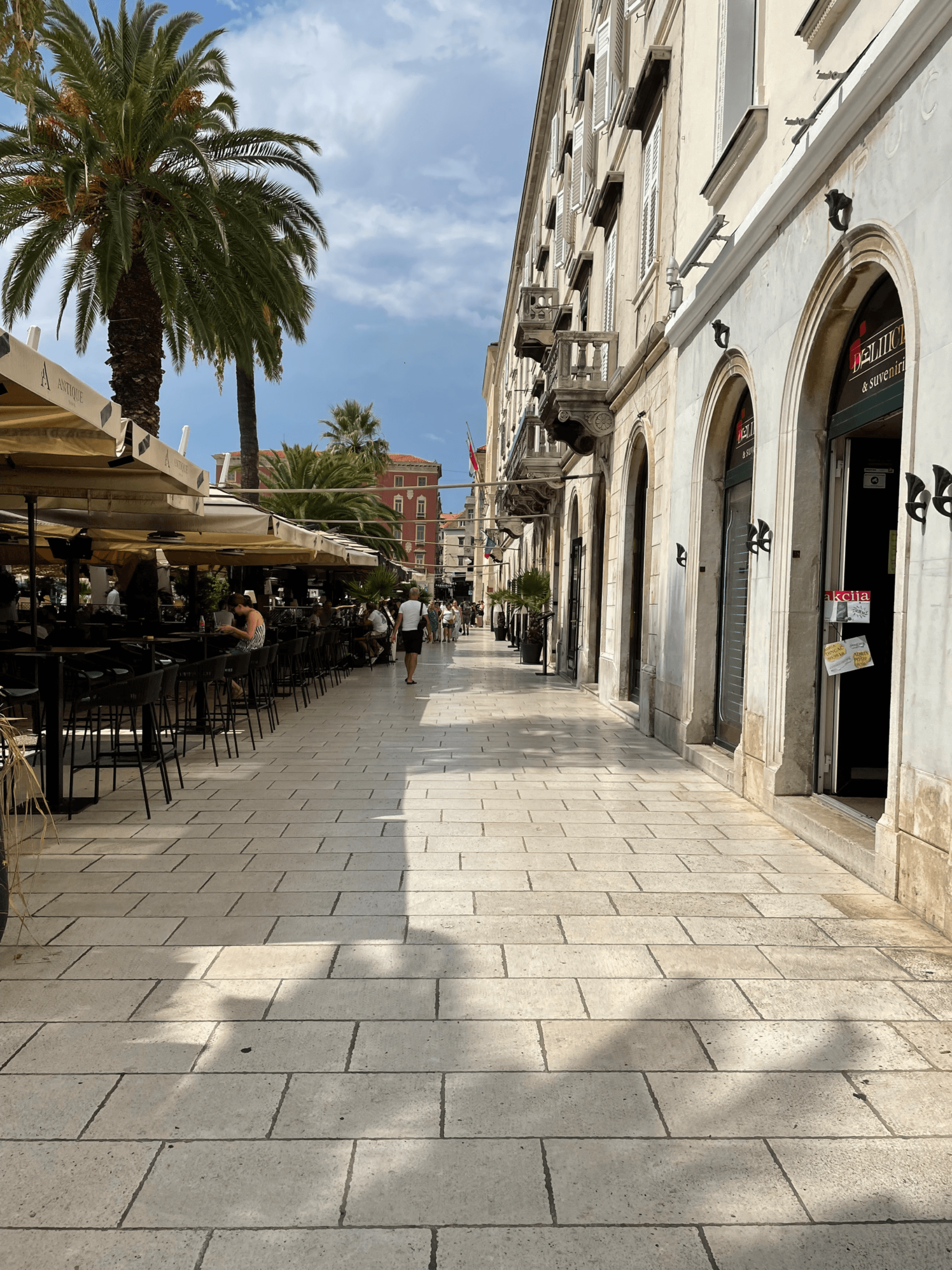
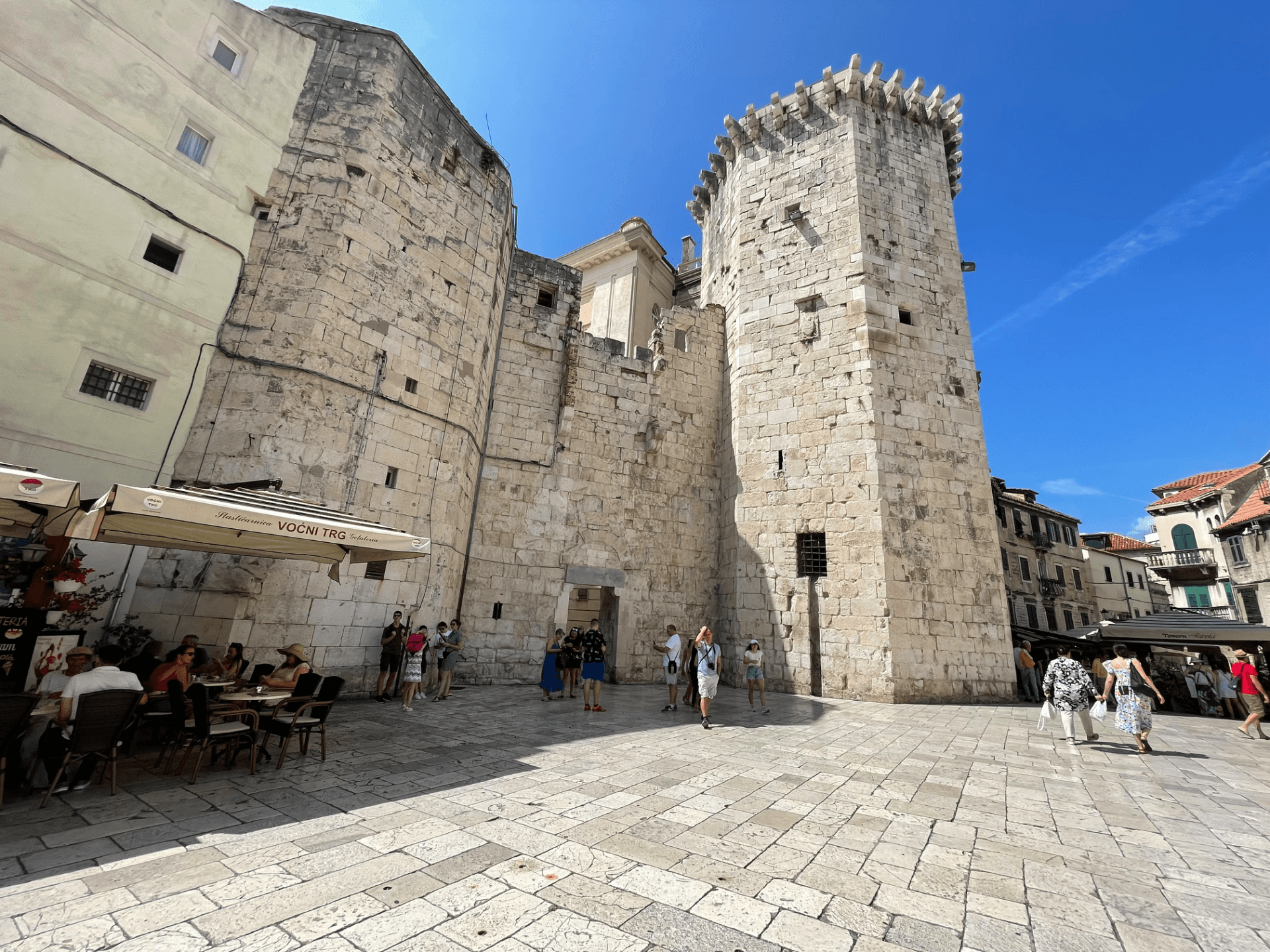
Diocletian's Palace and the old town : This is the heart of Split, and honestly, nothing quite prepares you for what you're about to see. Built between 295 and 305 AD by the Roman emperor Diocletian as his retirement residence, the palace is today one of the best-preserved Roman monuments in the world and more importantly, it's still lived in. Houses, restaurants, shops and bars have grown up inside the ancient walls over the centuries. As you wander through the white stone alleyways, you'll have this strange and wonderful feeling of walking through history while people go about their daily lives around you. A UNESCO World Heritage Site, the palace is not to be missed and deserves more than just a quick walk-through.
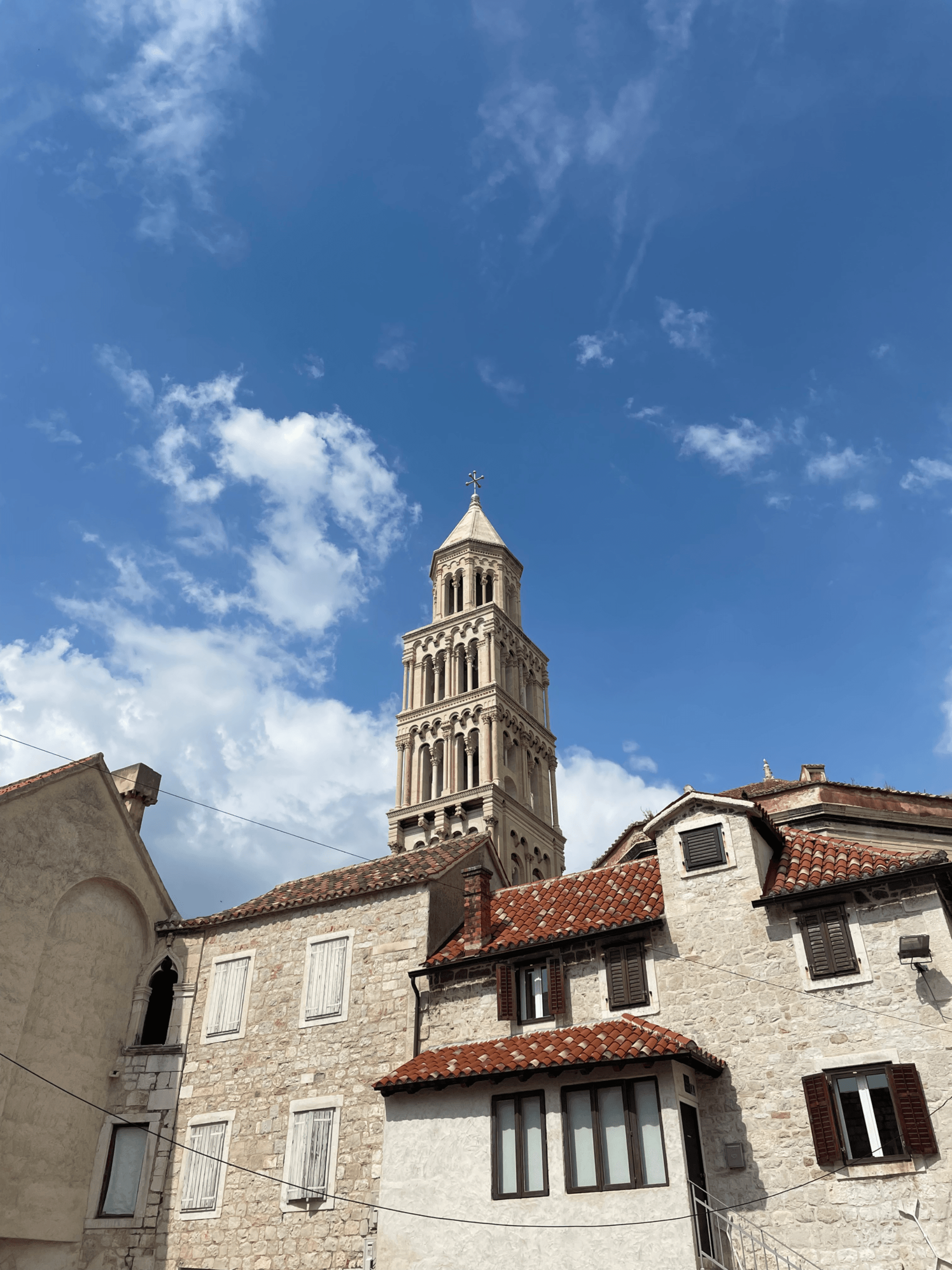
The Peristyle and Cathedral of Saint Domnius : At the heart of the palace, the Peristyle is the central square around which imperial life once revolved. This is where historical shows and reenactments regularly take place, including the famous changing of the guard in full Roman costume don't miss it if you happen to be there at the right time. The cathedral that borders the square is itself a fascinating case : it was built inside the mausoleum of Diocletian, an emperor who notoriously persecuted Christians. History has a great sense of irony.
The underground halls : Often overlooked, the underground halls of Diocletian's Palace are a visit in their own right. These vast subterranean spaces stretching beneath the entire palace were used for centuries as a dump and storage area, before being excavated and opened to the public. The acoustics are impressive, the atmosphere is eerie, and the sheer scale gives you a real sense of just how monumental the original palace was. An experience that stays with you.
The walls and city gates : The palace is framed by four great facades, each with a gate at every cardinal point. The Golden Gate to the north is the most imposing and best preserved. Walking around the perimeter, you really start to appreciate the scale of the Roman construction. Just outside the Golden Gate stands the monumental statue of Grgur Ninski, a 10th-century Croatian bishop rubbing his big toe is said to bring good luck, according to local tradition.
Marjan Hill : Split's very own green lung, this pine-covered hill stretches out into the Adriatic to the west of the old town and is classified as a natural park. Several hiking trails and cycling paths wind their way through the Mediterranean vegetation, offering a welcome escape from the tourist hustle below. At the top, the views over Split's bay, the surrounding islands and the city's rooftops are absolutely stunning, especially at sunset. Along the way you'll come across small chapels carved into the rock and the Meštrović Gallery, dedicated to one of Croatia's greatest 20th-century sculptors. Allow around 45 minutes to walk up comfortably from the centre.
Froggyland : We couldn't skip this completely unhinged museum. Tucked just outside the old town, Froggyland is home to a collection of 507 stuffed frogs, arranged in 21 dioramas depicting human activities frogs at school, at the circus, in court, at the pub. The life's work of Hungarian taxidermist Ferenc Mere, who spent ten years between 1910 and 1920 crafting these little scenes. It's weird, it's fascinating, and honestly you come out smiling. The ticket costs around 13-15€ which feels a little steep for the size of the museum (give it 20-30 minutes), but it's a one-of-a-kind experience you won't regret.
Bačvice Beach : A short walk from the old town, this urban beach is one of the most iconic in Croatia, largely because it's the home of picigin a traditional Dalmatian sport where players try to stop a ball from touching the shallow water. Great atmosphere guaranteed. Easily accessible on foot from the centre, it's the perfect spot for a swim between visits.
3- The little extras we loved discovering
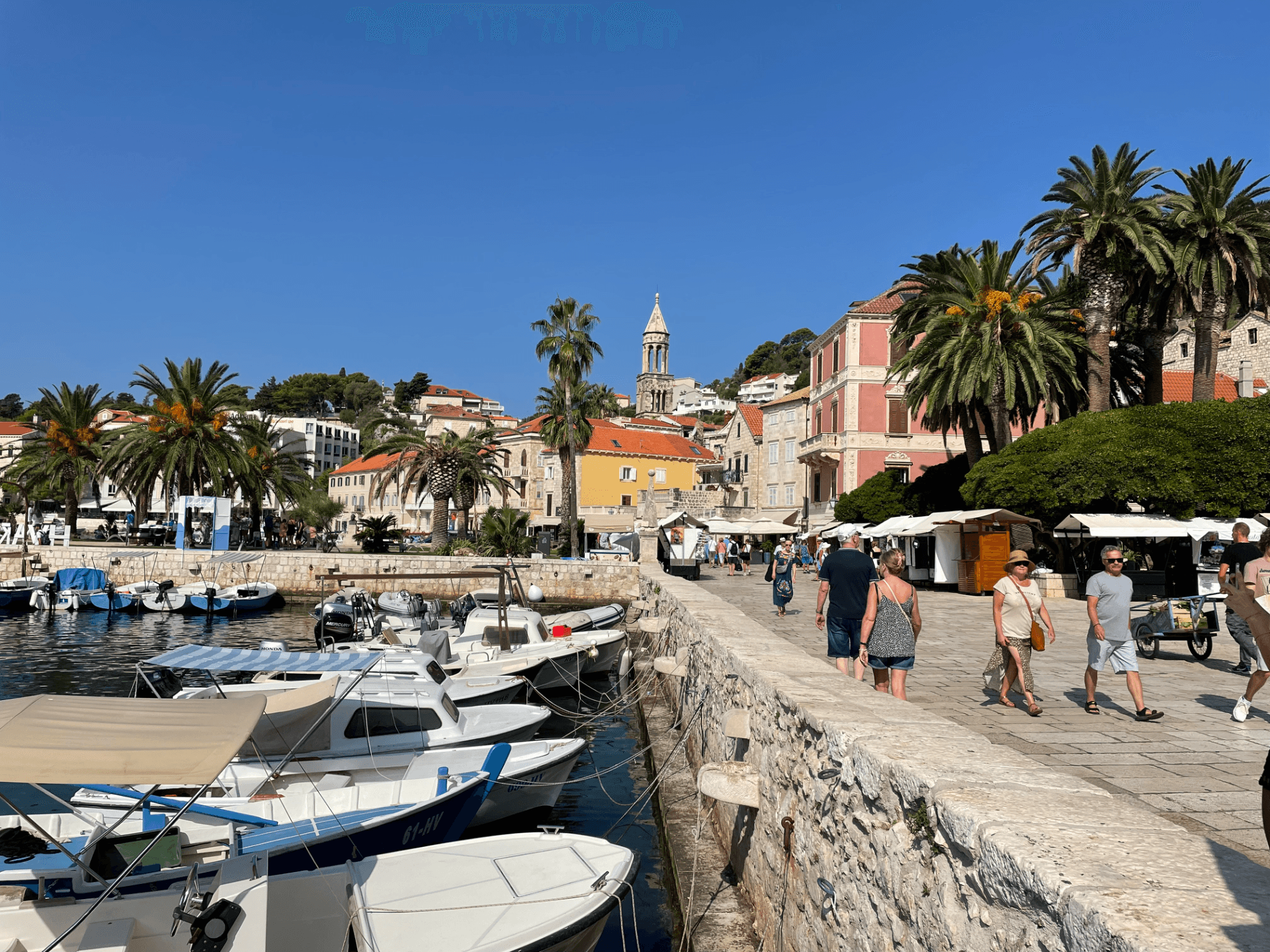
A day trip to Hvar : If you have a free day, jump on the ferry to Hvar. The island is often called the most beautiful in Croatia, and it's easy to see why. The old town of Hvar, with its hilltop fortress, flower-lined streets and turquoise waters, is absolutely worth the trip. The crossing from Split takes about an hour. We'd recommend leaving early in the morning to make the most of it.
The neighbourhoods outside the old town : Step outside the tourist perimeter and Split reveals a very different face, much more raw and unfiltered. Yugoslav-era housing blocks, local markets, neighbourhood cafés it's a sharp contrast to the postcard version of the old town, and gives you a more honest and complex picture of the city. Not necessarily pretty, but fascinating if you want to understand Croatia beyond the tourist trail.
Klis Fortress : Perched 360 metres above the city, this medieval fortress looms over Split and offers a breathtaking panorama over the entire Dalmatian bay. Built to defend the hinterland against Ottoman invasions, it held out for decades before finally falling in 1537. Game of Thrones fans might recognise it, it served as the city of Meereen in the series. Easily reachable by bus from the centre, it makes for a great half-day trip.
Poljud Stadium and a Hajduk Split match : If you're lucky enough to be in Split on a match night, don't miss it. Hajduk Split is far more than a football club in Croatia, it's a genuine institution, almost a religion for the locals. The atmosphere inside Poljud stadium lives up to that passion : the Torcida, Hajduk's supporter group, are considered one of the oldest and most passionate ultras in Europe. Even if you're not a football fan, attending a match here is above all a dive into local culture that few other activities can match. Check the fixture list before you leave and book your tickets in advance if you're visiting in high season.
A day trip to Krka National Park : If Hvar is the unmissable island, Krka is the unmissable nature excursion from Split. About an hour's drive away, the park is famous for its spectacular waterfalls, turquoise lakes and boat rides between the different pools. A full day is more than enough, and organised shuttles leave regularly from Split. Just be aware that entrance fees peak in summer (up to 40€ between June and September), so factor that into your budget.
Trogir : Just 30 minutes from Split, this small medieval town listed as a UNESCO World Heritage Site is well worth a detour if you have a free day. Its cobbled streets, Venetian-influenced buildings and Saint Lawrence Cathedral make it one of the best-preserved towns on the Dalmatian coast. Half a day is plenty to soak it all in.